Rocket plume flows from launch vehicles generate extreme amounts of acoustic energy that pose risks to the payload, vehicle, and surrounding infrastructure. The acoustic energy transmitted through the launch vehicle and payload as pressure waves may cause structural damage. To certify new instrumentation or payloads, engineers must estimate the loads that the payload will experience during launch. Predicting these acoustic loads numerically using Computational Fluid Dynamics (CFD) is an attractive alternative to expensive physical testing.
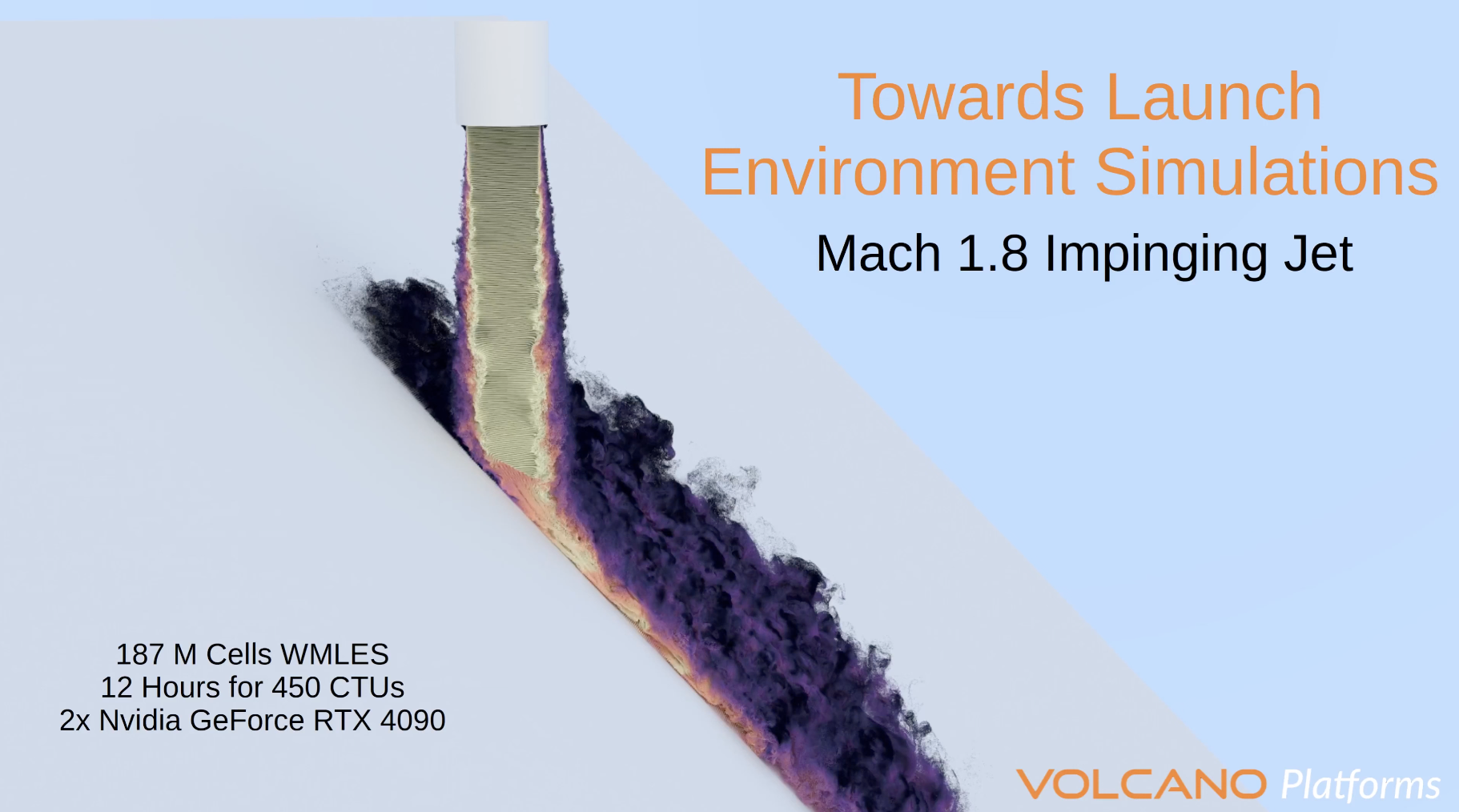
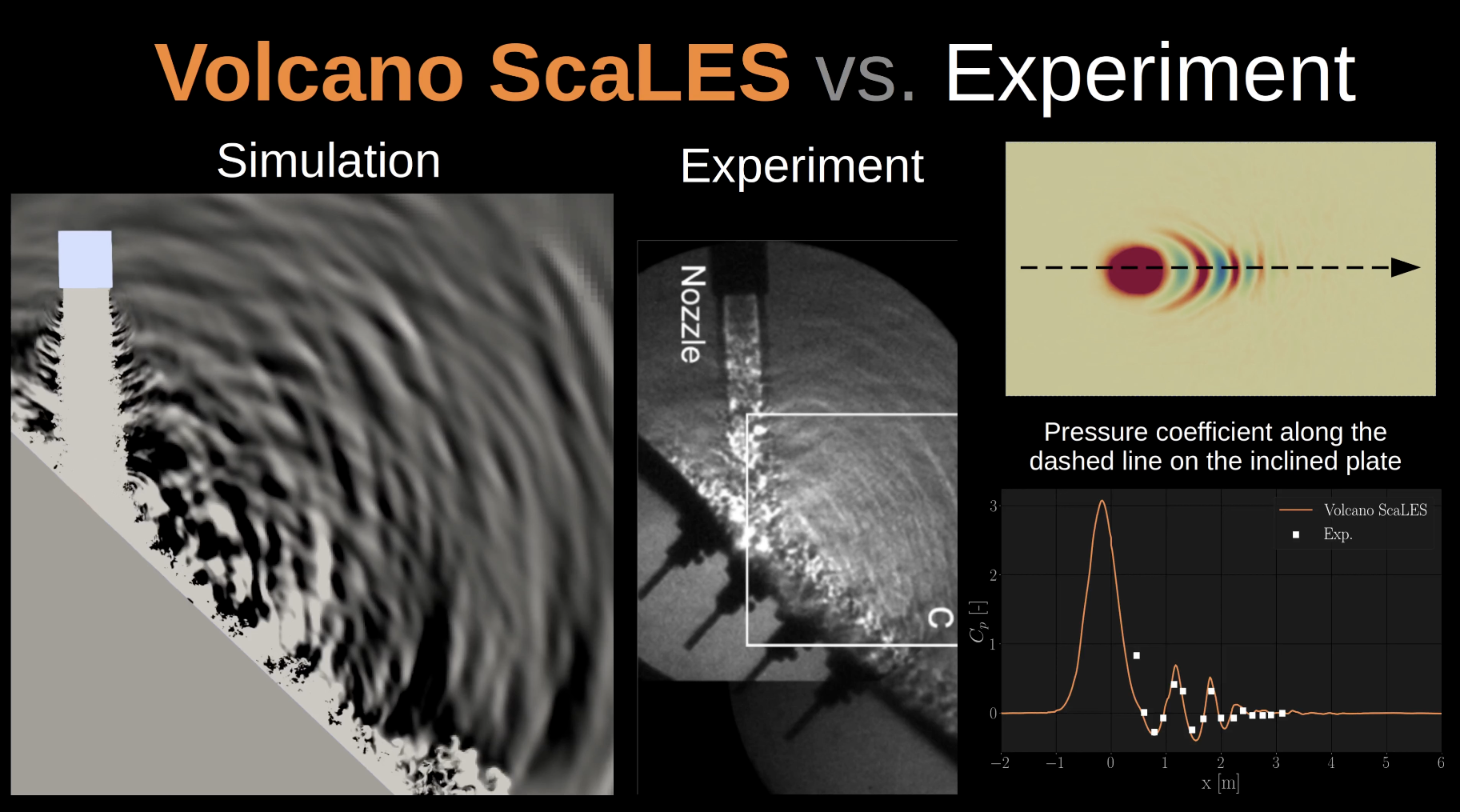
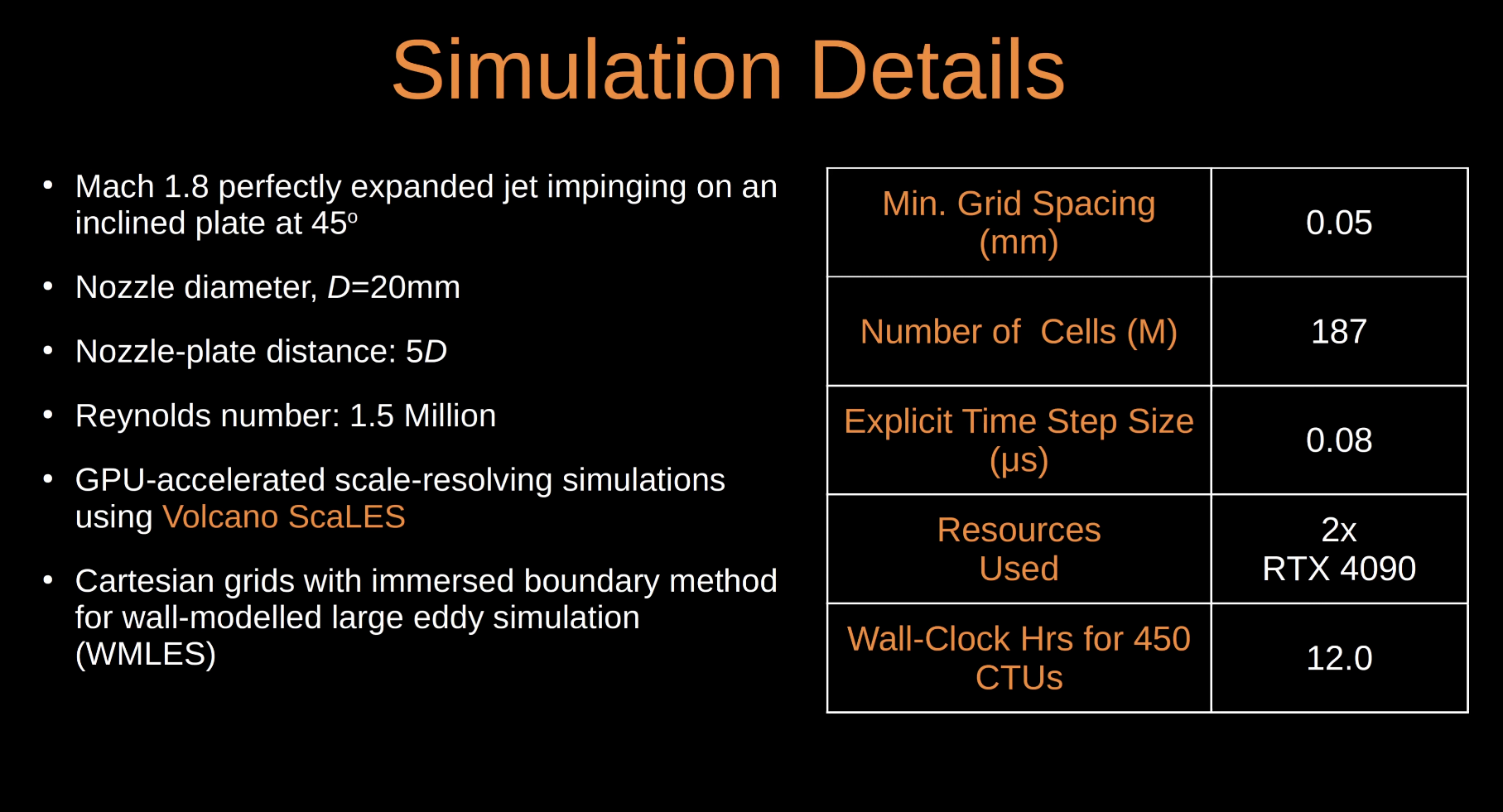
Supersonic jet impingement on an inclined plate serves as a canonical test case not only for launch acoustics, but also in other applications such as blast deflectors on an aircraft carrier deck. A newly developed compressible Navier–Stokes solver based on octree Cartesian grids, Volcano ScaLES, is used for Wall-Modelled Large Eddy Simulations (WMLES) of a Mach 1.8 perfectly expanded jet impinging on an inclined plate at 45-deg. The video shows a 3D simulation with 187 million cells performed in half a day on a desktop computer containing just two Nvidia RTX 4090 GPUs with 24 Gb of memory each.
This represents a major breakthrough in LES utilization for launch environment aeroacoustics predictions making “supercomputer-class” calculations routine on readily available resources. Automated, predictive, and cost-effective simulation capability is critical to provide the vast amount of data needed to train AI/ML models for engineering decisions.