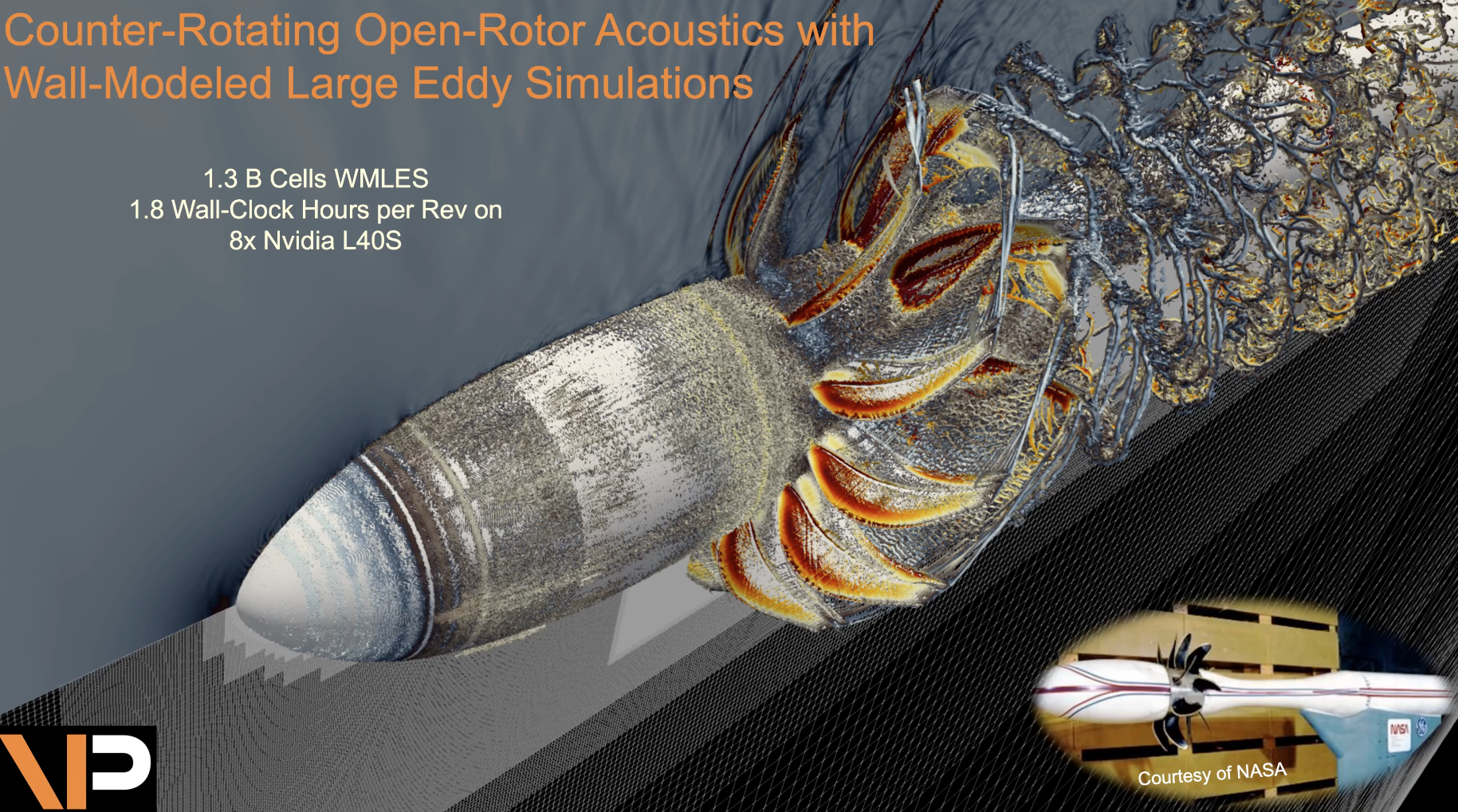
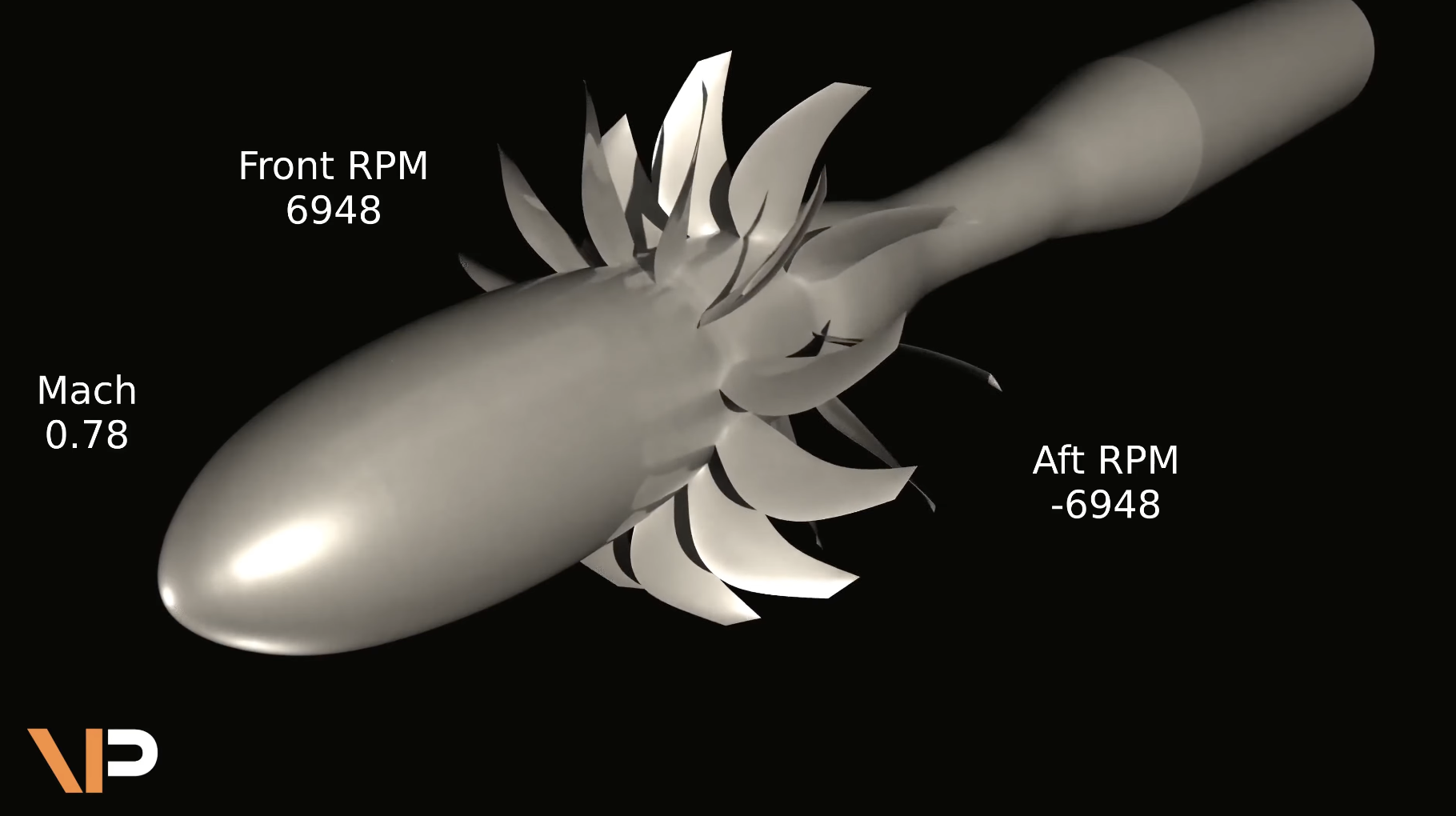
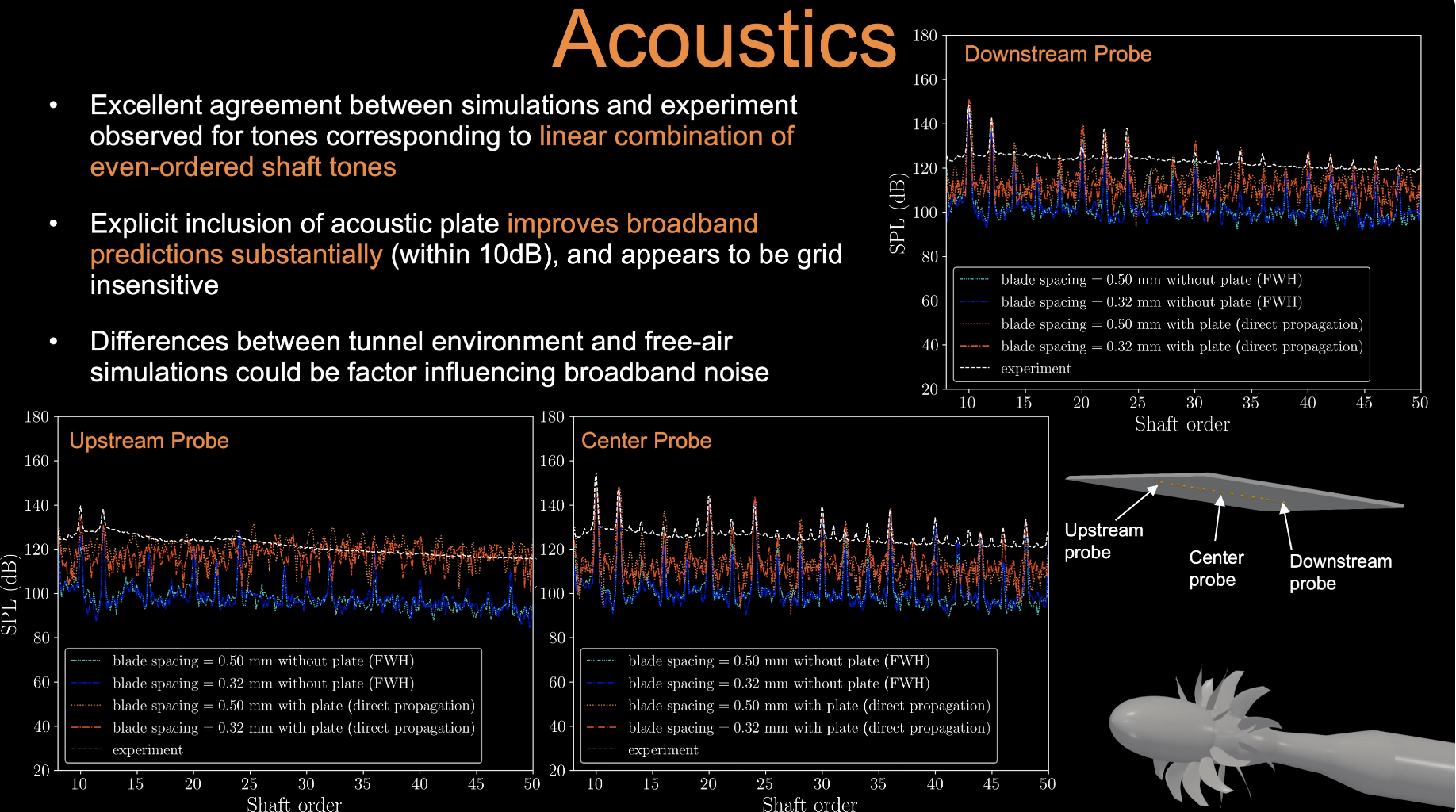
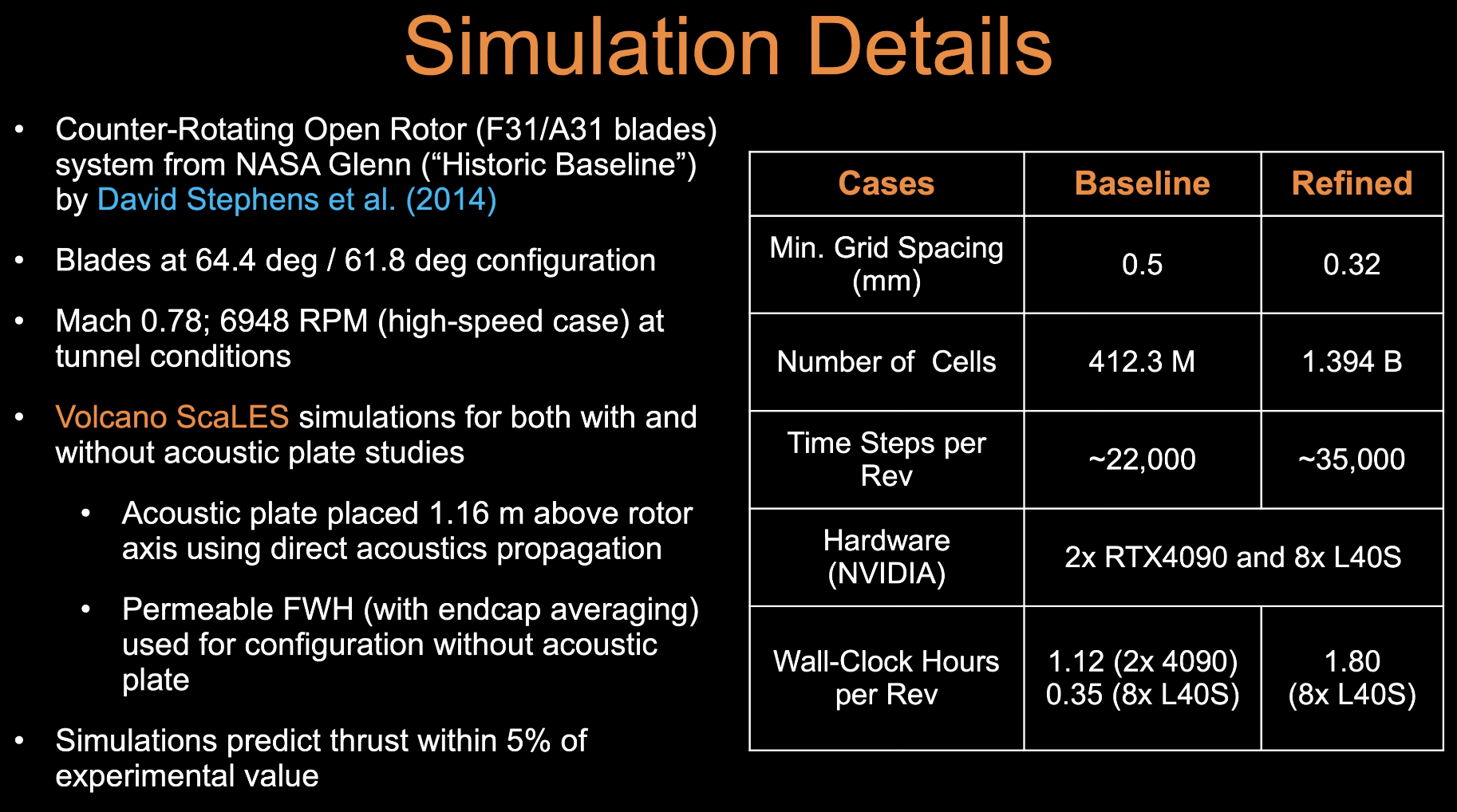
Counter-rotating propellers (often referred to as open rotors) were first demonstrated as a viable technology in the 1970s as a solution to the oil crisis. The concept received renewed interest in the mid 2000s with new environmental standards forcing OEMs to explore solutions that achieved a substantial advancement in fuel economy. A collaboration between NASA Glenn Research Center and industry partners resulted in several new designs for counter-rotating open rotors with studies focused on both performance as well as aeroacoustics. Here we use Volcano ScaLES to study the “historical baseline” blade set (F31/A31) at high-speed cruise conditions (Mach 0.78, 6948 RPM). The 1.3 Billion point grid simulations that take roughly 15 hours (“overnight”) on a single server of 8xL40S GPUs, are shown to capture the complex blade-vortex as well as shock-vortex interactions seen in this transonic flow with good predictions of both the tonal and broadband components of the resulting noise. Data from NASA Glenn experiments is used for validation.