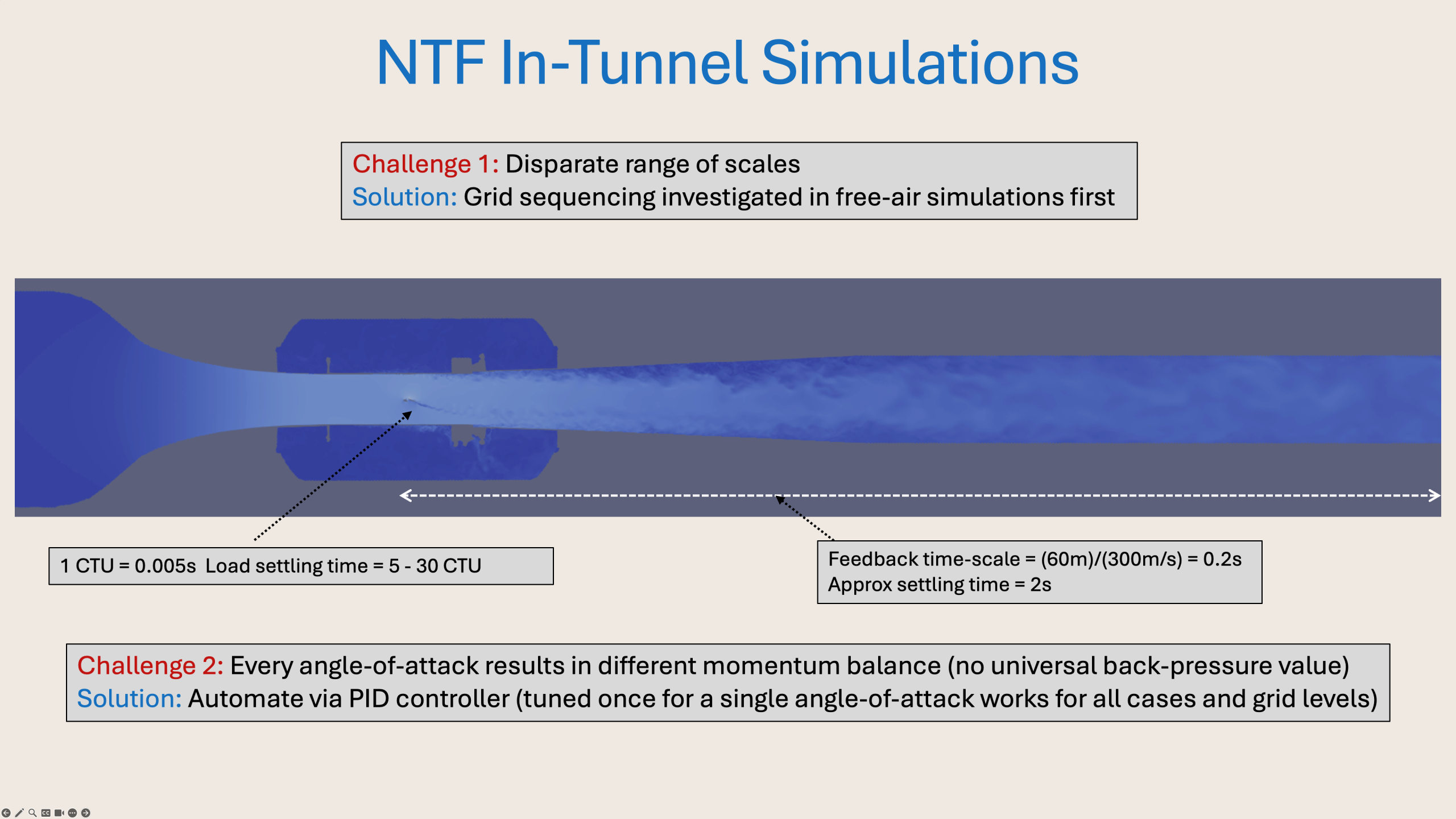
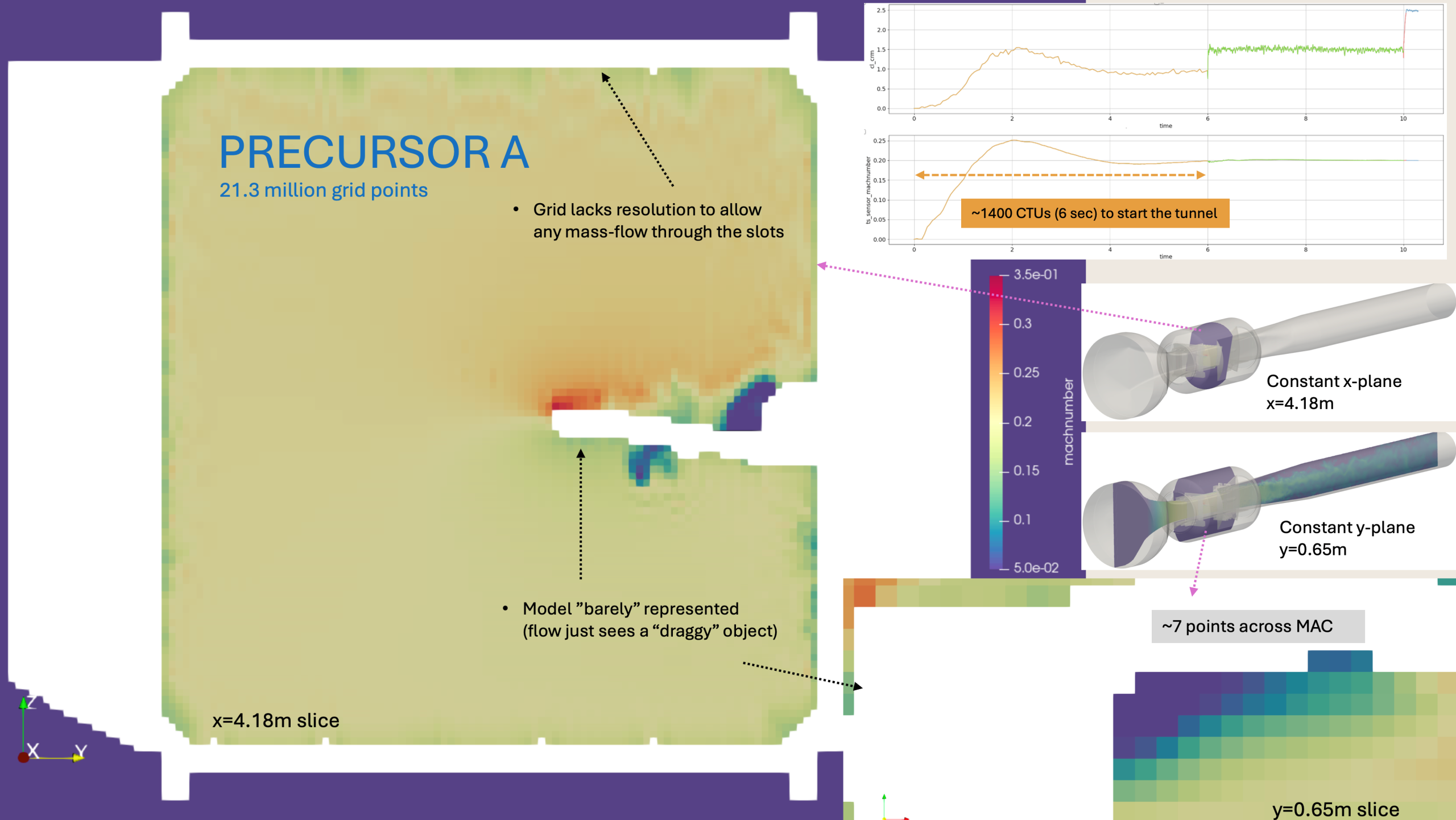
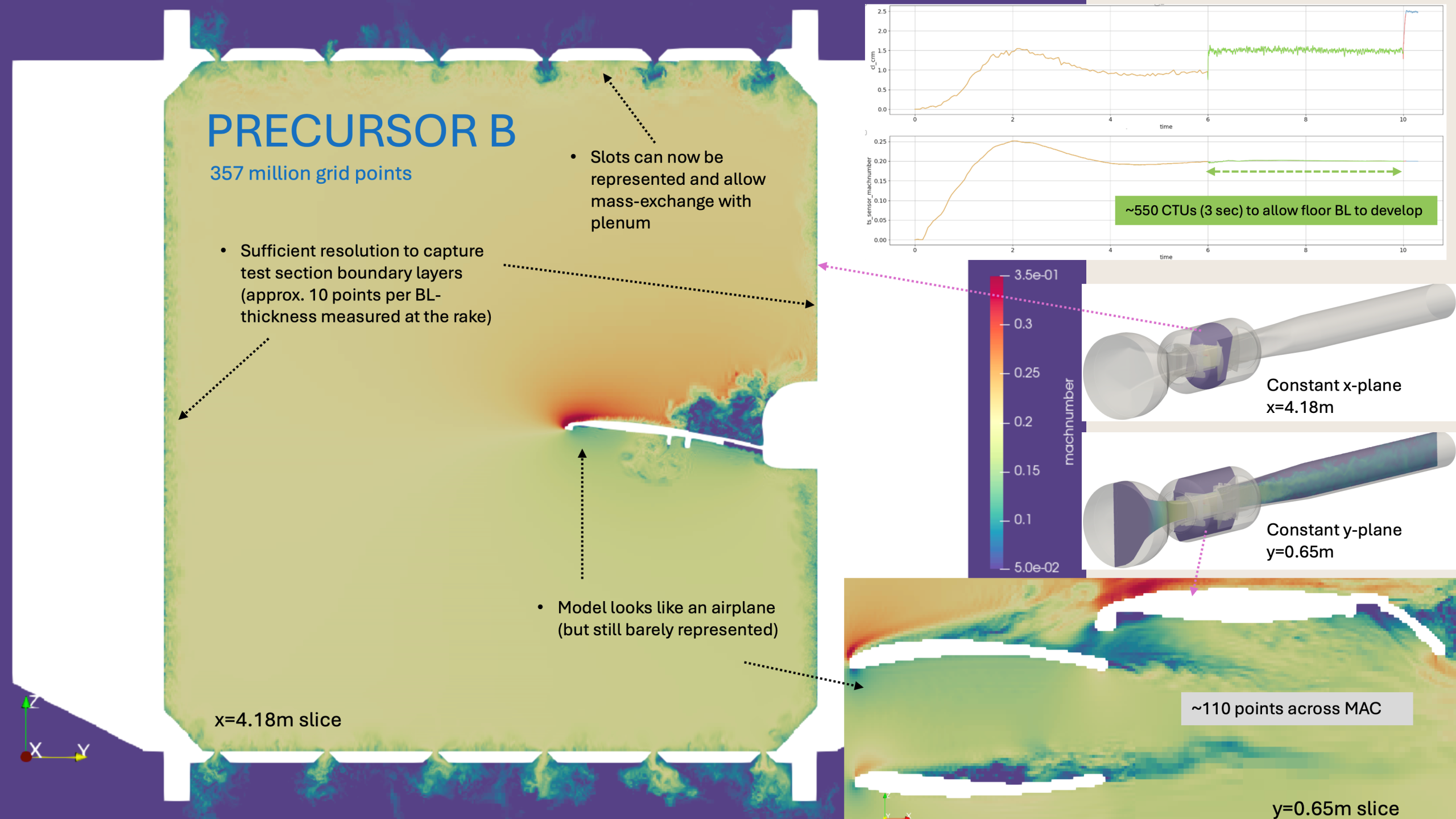
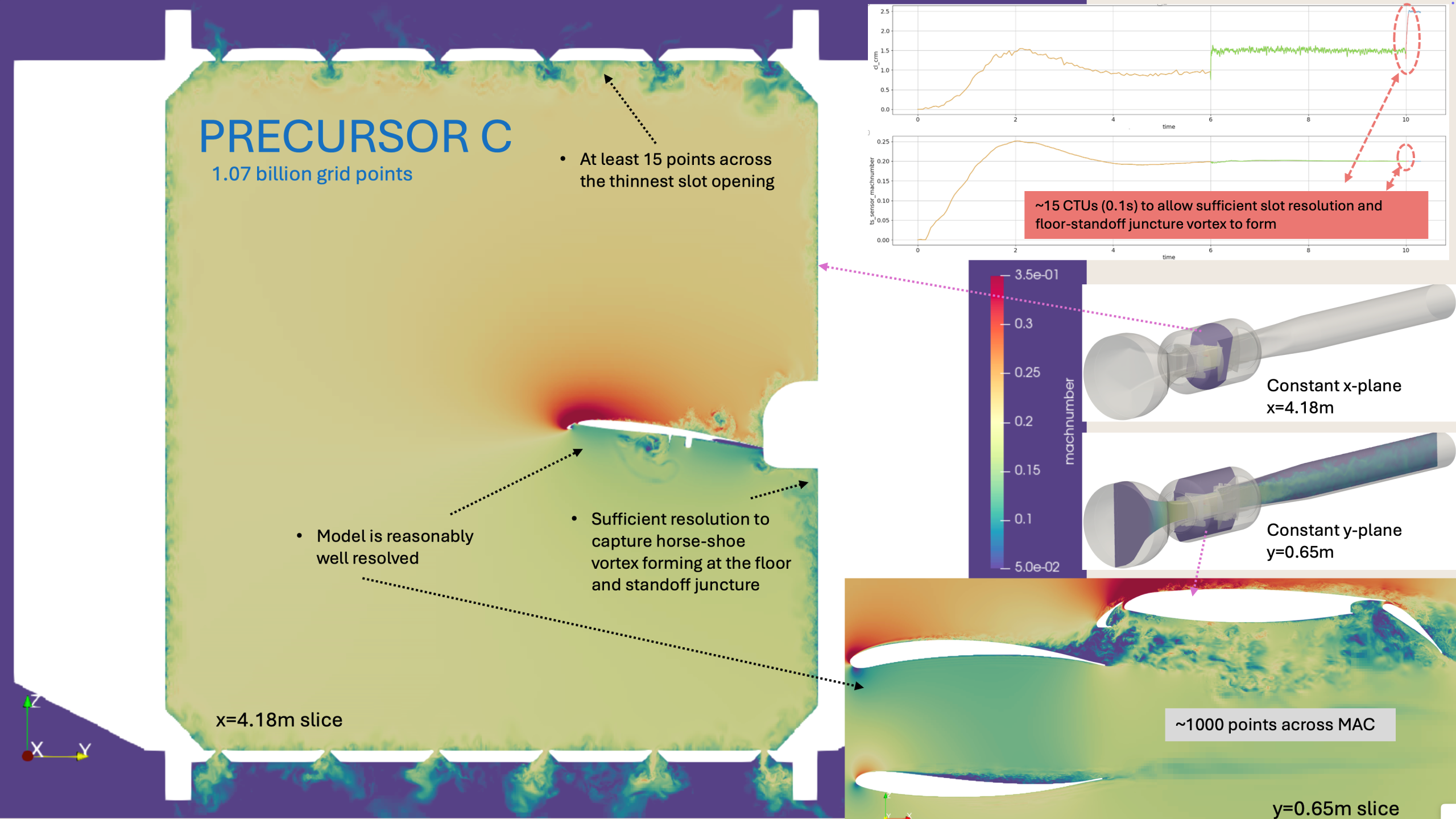
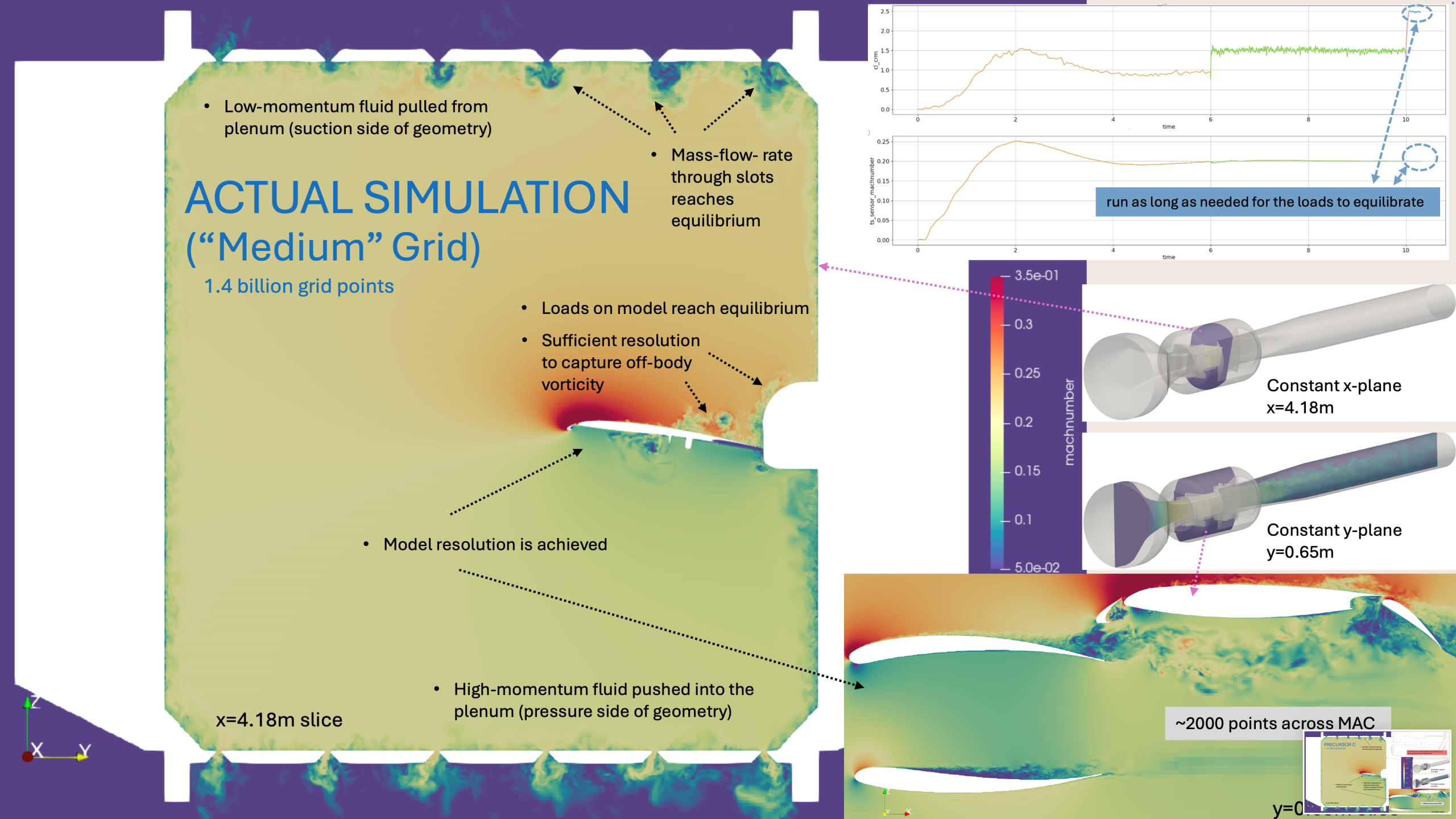
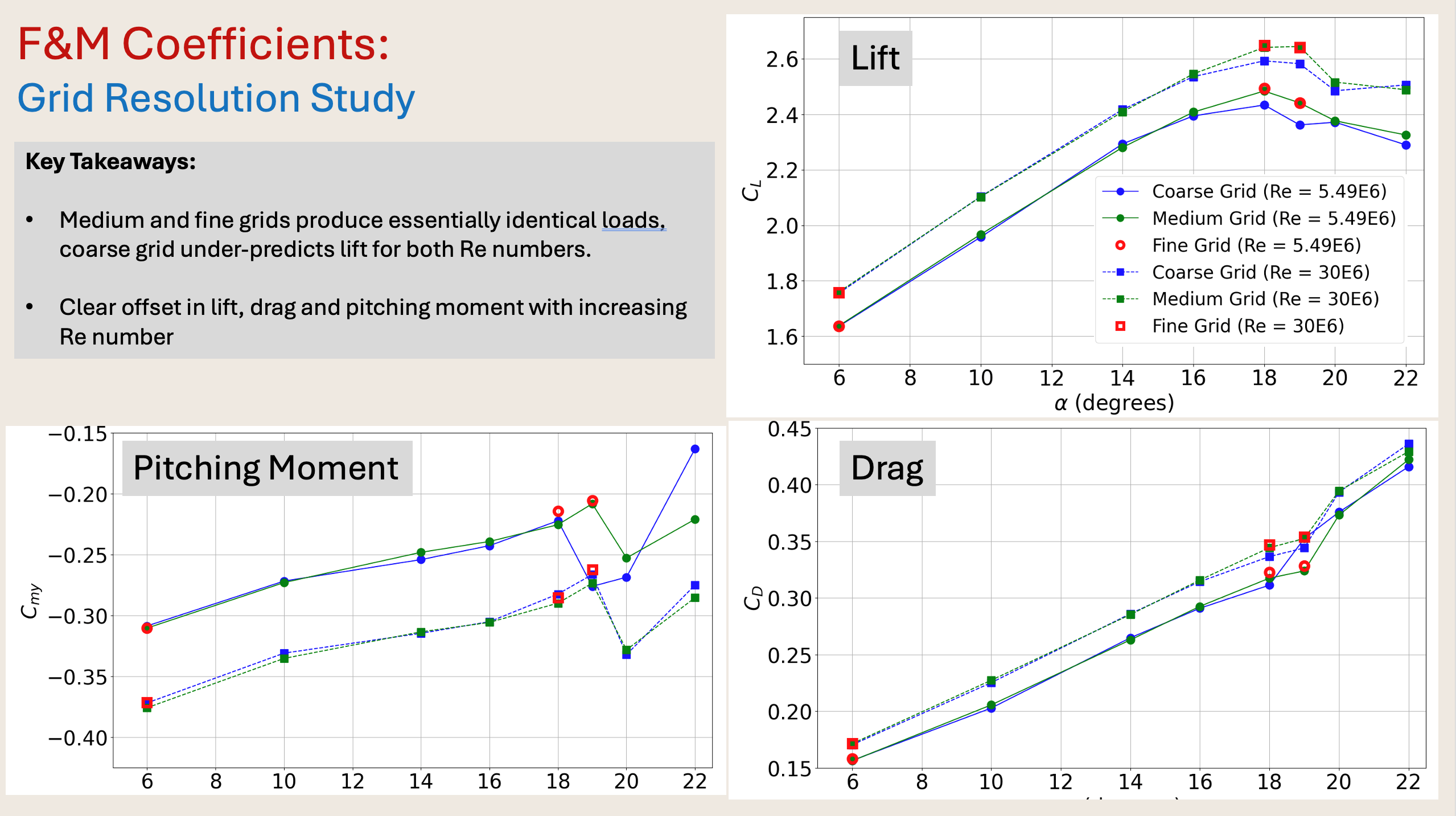
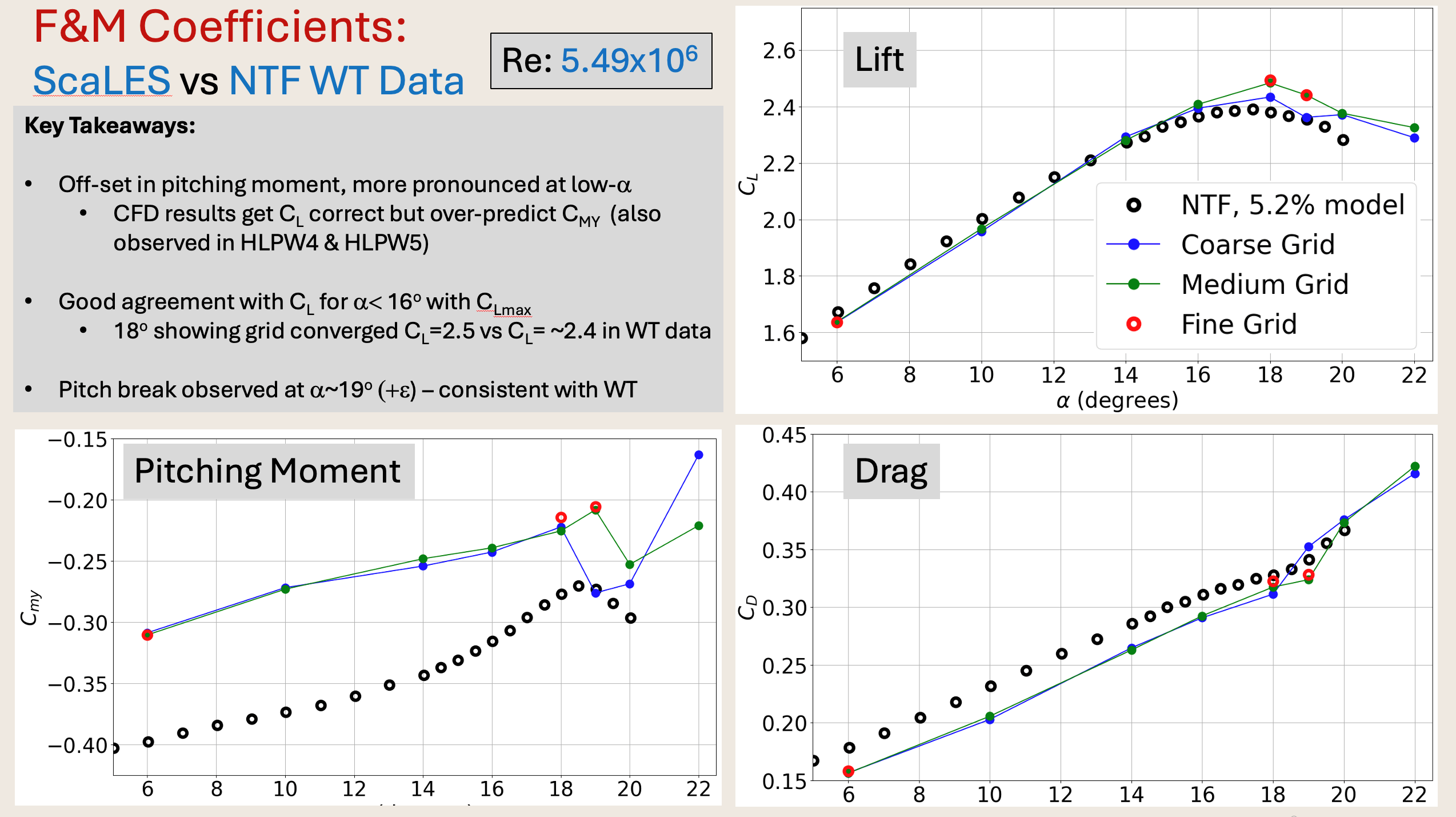
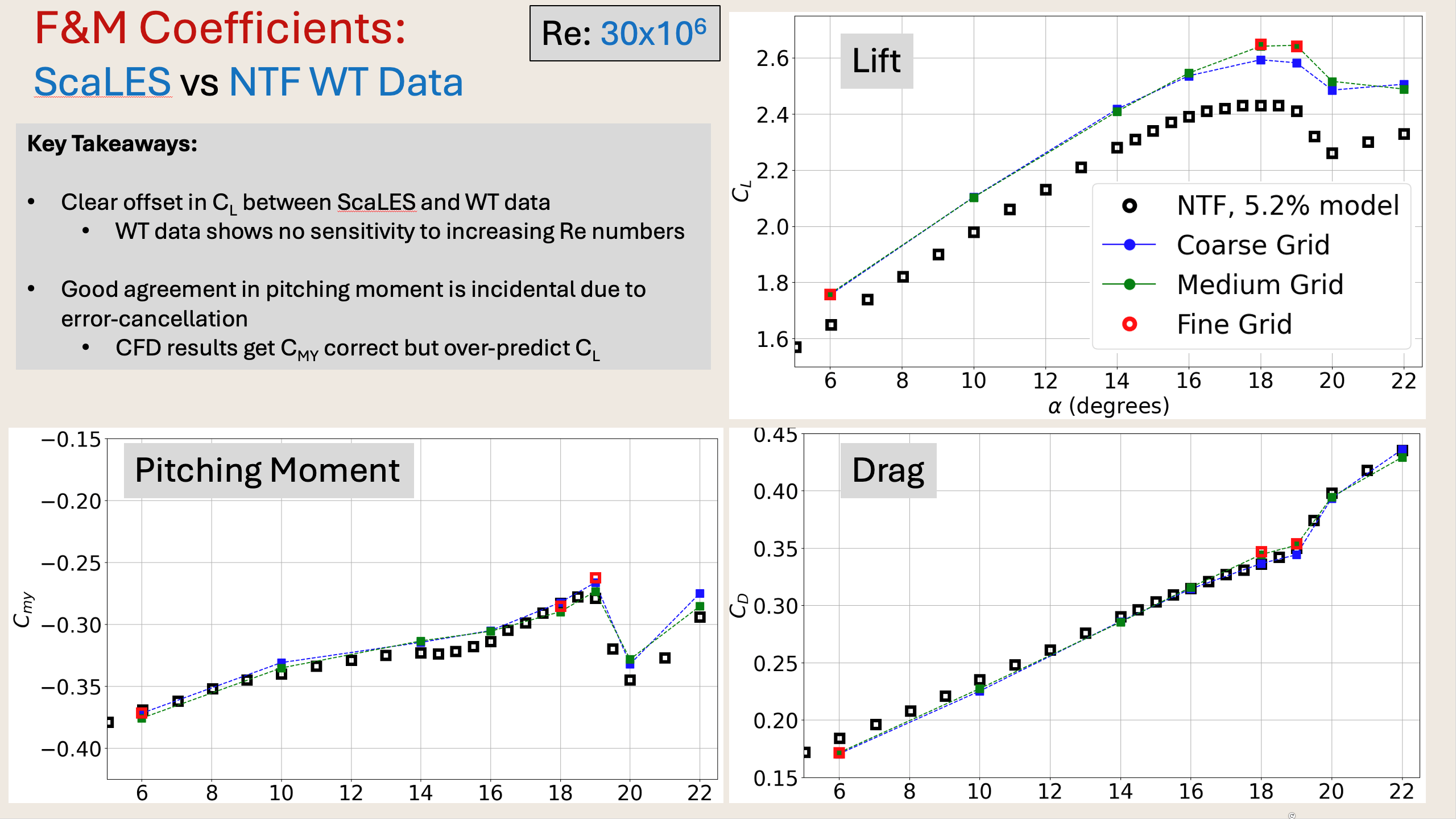
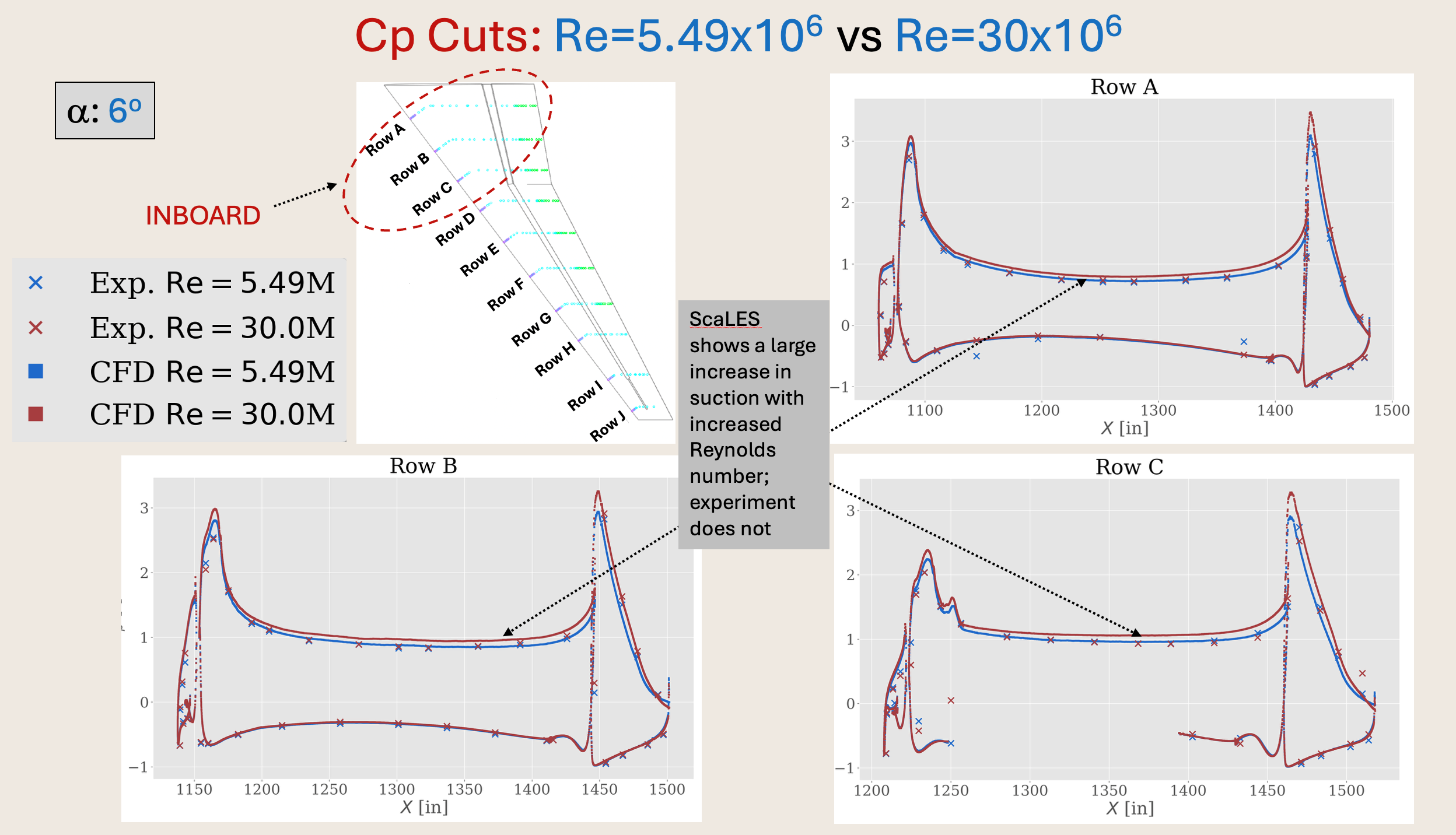
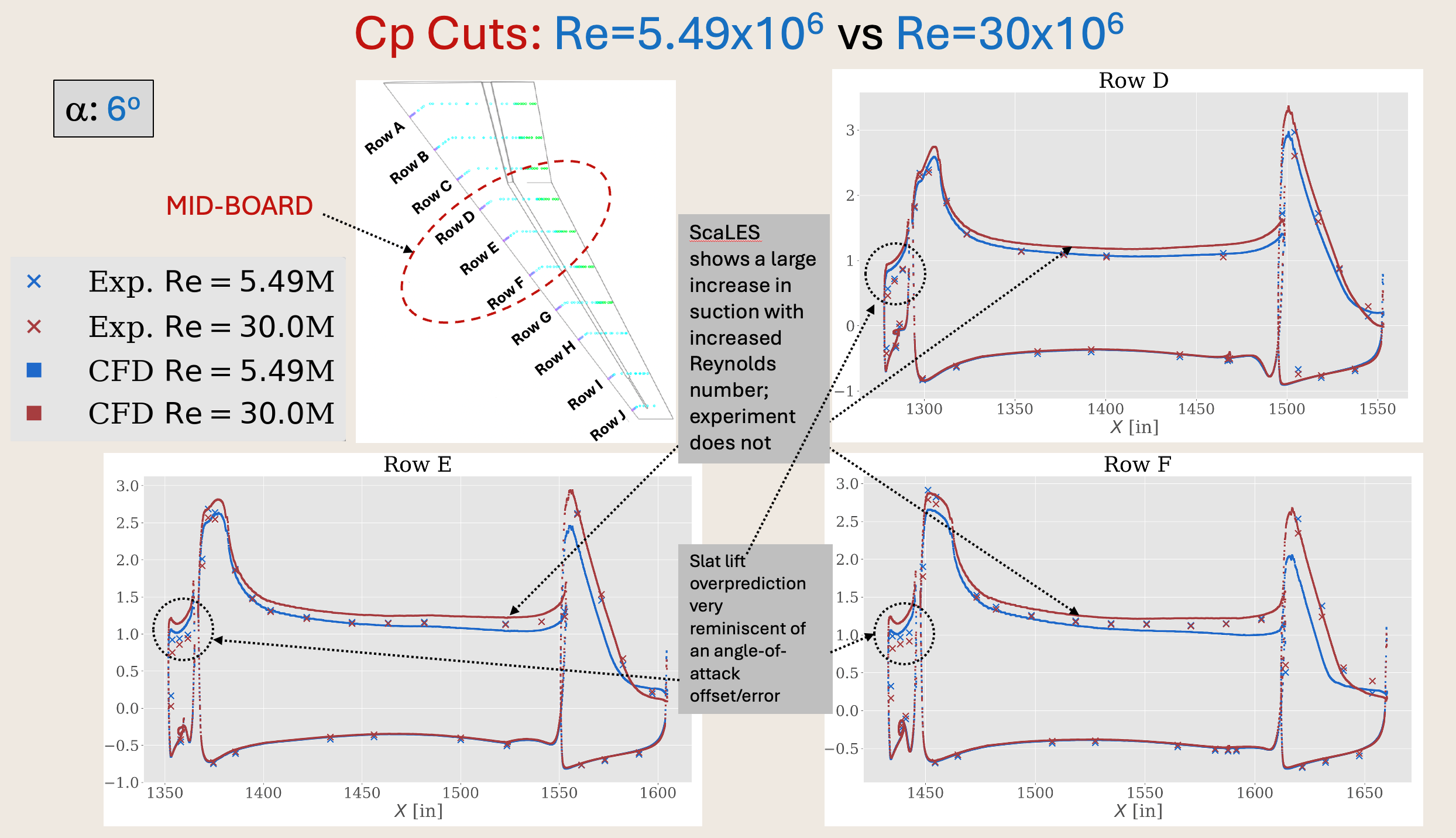
Computational predictions of aircraft in high-lift configurations are notoriously challenging due to the complex interplay between turbulent boundary layer separation, off-body vortex tubes, and wake-boundary layer merges. These complexities are further compounded in wind-tunnel experiments using semi-span wall-mounted models, which differ from free-air idealizations due to inviscid effects from the mounting peniche and viscous effects from the floor-boundary layer juncture flow. To characterize these differences, Volcano ScaLES was used as part of a NASA funded project to simulate the High-Lift Common Research Model (CRM-HL) within the National Transonic Facility (NTF). Performing Large Eddy Simulations (LES) for such flows is difficult, as they involve dynamic spatio-temporal scales ranging from tunnel-scale unsteadiness to non-equilibrium boundary layers. To mitigate these challenges, an innovative grid-sequencing approach was employed, as demonstrated in the attached video. Simulations using grids of up to 2.1 billion points were completed for CLmax conditions within a day using modest resources: a single server of Nvidia RTX 6000 Pro Blackwell with 8-GPUs. Additional technical details and results for three different Reynolds numbers are available in AIAA SciTech Paper 2026-0020.